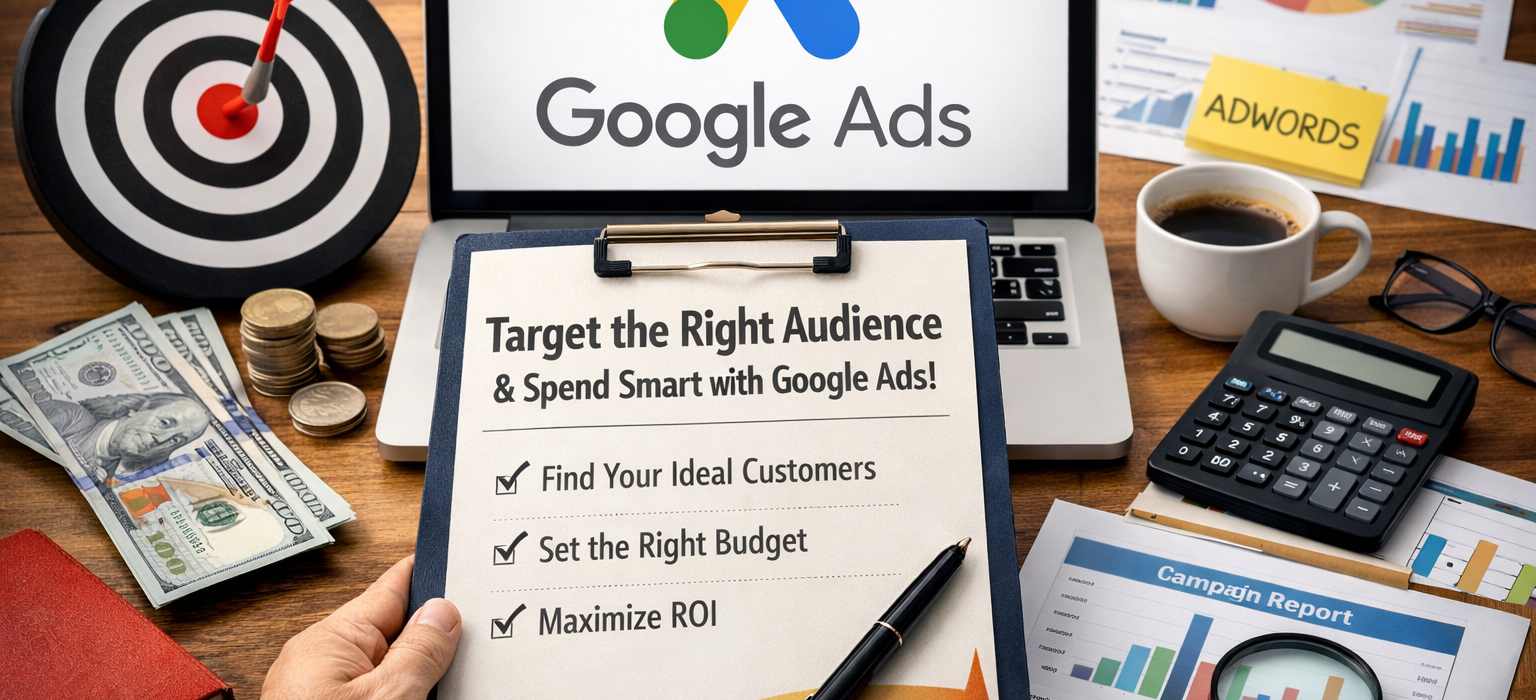
Running ads on Google Ads can be one of the fastest ways to grow a business—but only if done correctly. Many companies waste thousands of dollars every month simply because they target the wrong audience or structure campaigns poorly.
If your goal is to get real leads, real patients, or real customers, you need a strategy focused on precision targeting and budget efficiency.
Why Audience Targeting Matters
The biggest mistake businesses make is thinking that more traffic = more results.
In reality, qualified traffic is what drives revenue.
When your ads are shown to the wrong audience:
- You pay for clicks that never convert
- Your cost per lead increases
- Your return on investment drops
On platforms like Google, users already have intent. Your job is to match that intent with the right message.
Step 1: Use High-Intent Keywords
Not all keywords are equal.
There are 3 types:
- Informational (low conversion): “what is google ads”
- Navigational (brand-related): “google ads login”
- Transactional (high conversion): “google ads agency near me”
👉 You should focus on transactional keywords.
Example:
Instead of targeting:
- “dermatology”
Target:
- “private dermatologist Montreal”
- “skin treatment clinic near me”
This ensures you’re reaching people who are ready to take action.
Step 2: Target the Right Location
Location targeting is critical, especially for local businesses.
With Google Ads, you can:
- Target specific cities
- Exclude irrelevant areas
- Focus budget where your customers actually are
👉 Example:
If your clinic is in Montreal, don’t target all of Canada. Focus on:
- Montreal
- Laval
- South Shore
This reduces wasted spend immediately.
Step 3: Use Smart Audience Segmentation
Beyond keywords, you can refine your audience using:
- Demographics (age, gender, income)
- Interests and behaviors
- In-market audiences (people actively searching for your service)
This is where most businesses fail—they stop at keywords.
👉 The real performance comes from combining:
Keywords + Audience signals
Step 4: Optimize Your Budget (Stop Wasting Money)
Spending more doesn’t mean getting more results.
To control your budget:
- Start with a controlled daily budget
- Analyze performance after 5–7 days
- Scale only what works
Key metrics to watch:
- Cost per click (CPC)
- Conversion rate
- Cost per acquisition (CPA)
If a keyword is expensive but not converting → pause it.
Step 5: Write Ads That Match Intent
Even with perfect targeting, bad ads will kill performance.
Your ad should:
- Match exactly what the user searched
- Be clear and direct
- Include a strong call-to-action
👉 Example:
Instead of:
“Best Medical Services”
Write:
“Private Clinic in Montreal – Same-Day Appointments Available”
Step 6: Use Landing Pages That Convert
Sending traffic to your homepage is a mistake.
Each campaign should have a dedicated landing page:
- Clear headline
- Trust elements (reviews, credentials)
- Simple contact or booking form
Your ad + landing page must feel like one continuous experience.
Step 7: Track Everything and Improve
Successful campaigns are never “set and forget.”
You need to:
- Track conversions
- Test different ads
- Adjust bids and keywords
Over time, this is how you:
- Lower your costs
- Increase your leads
- Dominate your market
Common Mistakes to Avoid
- Targeting too broad keywords
- Running ads without conversion tracking
- Ignoring negative keywords
- Sending traffic to poor landing pages
- Increasing budget without optimization
Final Thoughts
Google Ads is powerful—but only when used strategically.
If you:
- Target the right audience
- Control your budget
- Continuously optimize
You can turn ads into a predictable growth machine.
But if done wrong, it becomes one of the fastest ways to lose money.
Need Help Managing Your Google Ads?
A well-managed campaign can make the difference between:
- Losing money every month
- Or generating consistent, high-quality leads
If you want expert help with targeting, optimization, and scaling, working with a specialized agency can save you both time and money.