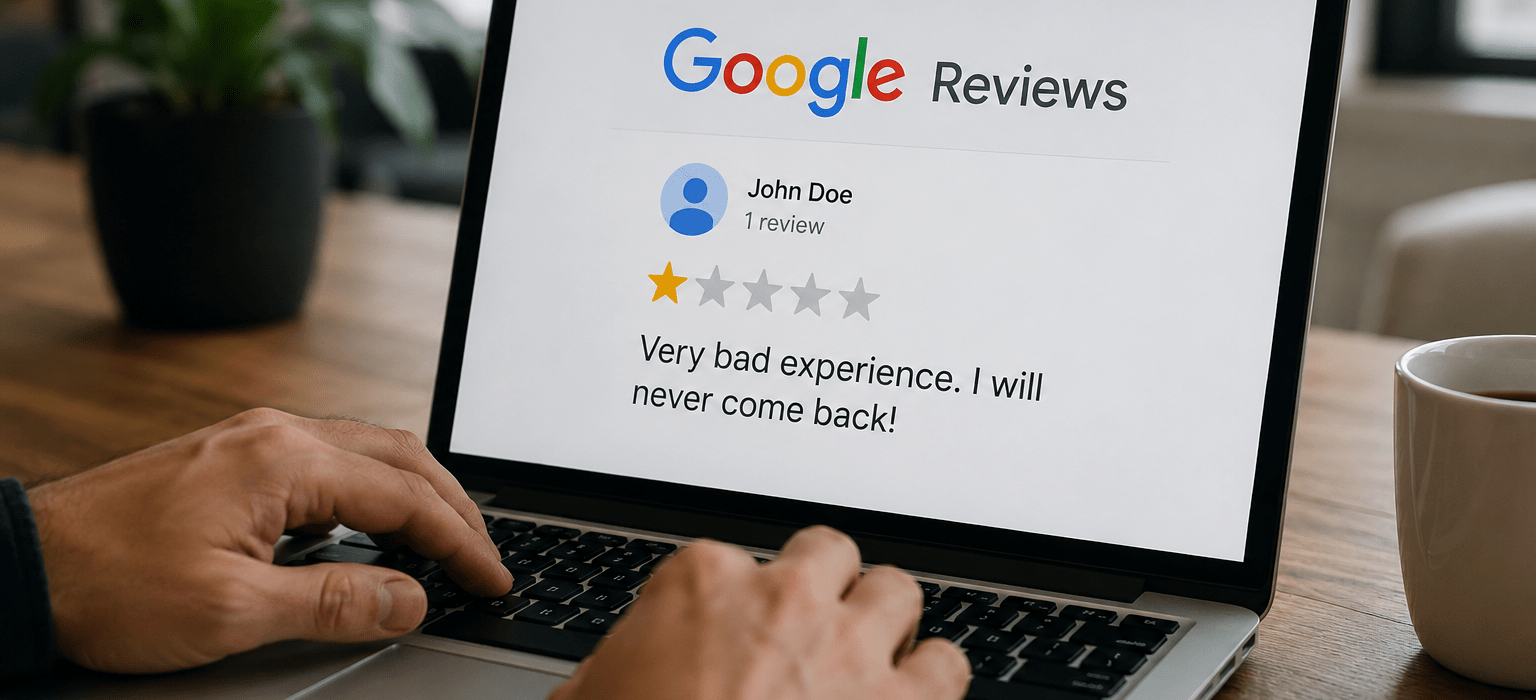
Receiving a negative Google review is already frustrating. But it becomes even more serious when the person leaving the review was never a customer, never booked an appointment, never purchased a service, or describes an experience that does not match your records.
Many business owners immediately think: “This person was never our client, so Google should remove the review.” In reality, Google does not usually remove a review only because a business disagrees with it. The review must appear to violate a specific policy.
That is why the right strategy matters. If you want to remove a bad Google review, the request should be based on facts, evidence, and the correct policy reason.
Quick Answer
A Google review from someone who was never a customer may be removable if it appears to be fake, misleading, abusive, a conflict of interest, or not based on a genuine experience.
However, simply saying “this person was never our customer” is often not enough. Businesses should collect evidence, check their records, respond professionally, and report the review using the correct policy category.
Why non-customer reviews are a serious problem
Online reviews influence trust. A single negative review can affect how potential customers see your business, especially when it appears on your Google Business Profile.
When the review comes from someone who was never a customer, the damage can feel unfair because the business has no real service experience to verify, explain, or correct.
A suspicious review may:
- Lower your average rating
- Discourage new customers from contacting you
- Create confusion about your services
- Damage your reputation with misleading claims
- Waste your team’s time investigating a fake or incorrect experience
This can be especially harmful for clinics, law firms, contractors, agencies, restaurants, consultants, and other local service businesses where trust is very important.
Can Google remove a review from someone who was never a customer?
Yes, but not automatically.
Google may remove a review if it violates its content policies. A review from a non-customer may qualify if it appears to involve fake engagement, misleading content, harassment, personal attacks, private information, conflict of interest, or another prohibited issue.
The important point is this: Google usually needs a clear policy reason.
A report that only says “this person was never our client” may be too weak. A stronger report explains why the review does not match a real customer experience and supports that claim with evidence.
Signs the reviewer may not be a real customer
Before reporting the review, look for signs that the review may not be based on a genuine experience.
Common warning signs include:
- The reviewer’s name does not appear in your customer records
- The review mentions a service your business does not offer
- The review describes the wrong location
- The reviewer refers to a staff member who does not work at your company
- The review mentions a date when your business was closed
- The described appointment, order, or visit cannot be found
- The review sounds like it was written by a competitor or former employee
- The reviewer has posted similar negative reviews for many businesses
- The review contains accusations but no clear details
- The review appeared after a dispute, spam attack, or suspicious activity
One sign alone may not prove that the review is fake. But several signs together can make the case stronger.
Example of a suspicious non-customer review
Imagine a clinic receives a review saying:
“The doctor was terrible and the service was very bad.”
The clinic checks its records and finds no patient under that name, no appointment matching the date, and no service matching the description.
In this situation, the clinic should not simply report the review as “fake.” A better approach is to document the mismatch and explain why the review does not appear to describe a genuine customer experience.
This is where a clear review removal strategy becomes important.
What evidence should you collect?
Evidence is one of the most important parts of the process. Before reporting the review, collect all relevant information.
Useful evidence may include:
- A screenshot of the review
- A search of your customer database
- Appointment records
- Order or invoice records
- Call logs
- Email records
- Booking system results
- Staff notes
- Proof that the service mentioned is not offered
- Proof that the business was closed on the date mentioned
- Proof that the review describes the wrong location
You should not reveal private customer information in a public reply. The goal is to keep a clear internal file and use the evidence carefully when submitting a removal request.
For a full explanation of how evidence helps, read our guide on how to get reviews removed the right way.
How to respond publicly to a suspicious review
Your public response matters. Even if the review seems fake, future customers may read your reply and judge your professionalism.
Avoid emotional replies such as:
- “You were never our customer.”
- “This is fake.”
- “This is from a competitor.”
- “We will take legal action.”
Instead, use a calm and professional answer.
Example:
“We take all feedback seriously, but we are unable to identify a customer experience matching the details in this review. We invite the reviewer to contact our team directly so we can better understand the situation.”
This type of response is useful because it:
- Shows professionalism
- Avoids revealing private information
- Signals that the review does not match your records
- Reassures future customers that your business takes feedback seriously
How to report the review properly
When reporting the review to Google, be specific. Do not only say “this review is fake.”
A stronger report should explain:
- The reviewer does not appear in your customer records
- The described experience does not match your services
- The review may describe another business
- The review contains misleading or false information
- The content does not appear to be based on a genuine customer experience
- The review includes harassment, threats, or private information, if applicable
The key is to connect the review to the correct policy issue. A review may be unfair, but unfairness alone is not always enough. The content must appear to violate a policy.
What not to do
When dealing with a suspicious review, avoid actions that can create more problems.
Do not:
- Reply aggressively
- Accuse the reviewer publicly without proof
- Reveal private customer information
- Ask employees or friends to post fake positive reviews
- Offer rewards for positive reviews
- Report every negative review without checking the policy
- Copy and paste the same complaint repeatedly
- Threaten the reviewer online
The goal is to protect your business without creating additional risk for your Google Business Profile.
What if Google refuses to remove the review?
Sometimes Google does not remove a review after the first report. This does not always mean the review is valid.
It may mean:
- The report was too general
- The wrong policy reason was selected
- The evidence was not strong enough
- The explanation was unclear
- The review did not clearly violate policy based on the first review
If the first attempt fails, review the case again. Look for a stronger policy angle and better evidence.
Ask yourself:
- Did we clearly explain why this does not match a real customer experience?
- Did we include enough details?
- Did we choose the right policy category?
- Did we avoid emotional language?
- Is there another issue, such as harassment, conflict of interest, or private information?
If the review is seriously affecting your reputation, professional support may help you prepare a stronger case.
Why review monitoring is important
A suspicious review should not be treated as a one-time problem. Businesses should monitor their Google Business Profile regularly, especially if they depend on local search.
Review monitoring helps you:
- Respond quickly to negative reviews
- Detect suspicious review patterns
- Protect your brand name
- Keep your profile active and professional
- Identify fake or misleading content
- Improve customer trust
If your business needs help managing reviews, replies, and profile optimization, our Google Business Profile management service can support your online presence.
Non-customer reviews can happen on other platforms too
Google is not the only platform where this problem happens. Businesses may also receive suspicious reviews on Yelp, Facebook, Trustpilot, and other review websites.
Each platform has its own rules, reporting process, and evidence requirements.
For example, the process to remove a Trustpilot review is different from the process used for Google reviews. However, the general principle is the same: the request should be factual, organized, and connected to the platform’s policies.
When should a business ask for help?
You may want professional help if:
- The review is clearly from someone who was never a customer
- The review contains serious false claims
- The review mentions the wrong service or location
- The review is damaging your reputation
- Google refused to remove it after your first report
- You are receiving multiple suspicious reviews
- You do not know which policy category to choose
A professional review audit can help identify whether the review has a realistic removal angle. It can also help avoid weak reports that waste time or reduce the chance of success.
Final thoughts
A Google review from someone who was never a customer can be harmful, but the best response is not anger. The best response is documentation, policy analysis, and a professional reporting strategy.
Before reporting the review, collect your evidence. Check your records. Identify the exact issue. Then explain why the review does not appear to reflect a genuine customer experience or why it may violate another relevant policy.
Not every negative review can be removed. But if a review is fake, misleading, abusive, or not based on a real experience, your business may have a valid reason to request removal.
Need help checking a suspicious review? Contact Remove Review for a free review audit and let our team review the situation.