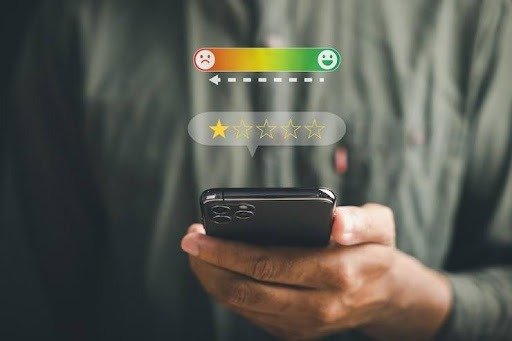
Bad Trustpilot scores cause “invisible churn”, deterring buyers before contact- while deflating ad performance and inflating acquisition costs. Mitigate damage by responding professionally to real customer grievances, flagging clear platform policy violations, or engaging risk-free professional review removal services.
Key Takeaways
- Non-Linear Revenue Loss: Just four negative reviews can deter 70% of prospects, creating compounding conversion drops that businesses misattribute to seasonality
- The Invisible Churn: Buyers spend nearly 14 minutes researching reviews; negative feedback drives silent defections before a business ever gets a lead
- Strategic Removal Options: While genuine complaints require professional resolution, fabricated competitor attacks or policy-violating reviews can be legally and permanently removed
Trustpilot’s high domain authority causes its brand-search pages to outrank most company websites. This is because consumers land on a Trustpilot profile before visiting a brand’s homepage.
When your company receives a low score, has unanswered reviews, offers no response to negative or fake reviews, and sees suspicious review spikes, that’s when your Trustpilot profile costs you customers.
This is the fundamental mechanism that makes even a single negative review dangerous. It is an upstream, pre-contact problem, not a post-sale PR issue. Let’s dig deeper into the facts.
The Revenue Math Behind Negative Trustpilot Reviews
Trustpilot bad reviews do not just affect your company’s reputation. The volume of reviews has a compounding relationship with star rating and revenue. Here’s what you should know:
| Number of Negative Reviews | Estimated Customer Loss | Revenue Impact | Key Psychological Trigger |
| 1 Negative Review | ~22% of prospective customers lost | 5–9% revenue decrease (per 1-star drop) | Uncertainty – buyers seek validation |
3 Negative Reviews | 59.2% of prospects deterred | Compounding conversion rate decline | Pattern recognition – “This keeps happening” |
4+ Negative Reviews | Up to 70% of potential customers lost | Significant revenue erosion | Social proof collapse |
| Unanswered Negatives (any volume) | Additional churn increase | Below-average revenue generation (reduces average revenue) | Perceived indifference to customer experience |
| Fake Competitor Attack Campaign | Unpredictable surge in negative reviews | Around 23-25% revenue reduction reported | Manufactured distrust at scale |
Table 1: Revenue Impact of Negative Trustpilot Reviews by Volume
The damage is non-linear. This means the damage caused by four negative reviews will be threefold that of one negative review.
The Silent Customer – Why You Never See Most of the Damage
This happens because of the “invisible churn”. It occurs when potential customers who read Trustpilot reviews find a negative review. This makes them form a negative impression of your company, and they simply do not reach out to you.
They leave no complaint, send no email, and give no signal. You lose a customer even before you get a chance to pursue them. Most businesses misattribute this decline to seasonality or ad performance.
A Capital One Shopping study has stated that consumers spend on average, 13 minutes and 45 seconds reading reviews before deciding on a purchase. And when they do find a negative review, they may decide without contacting the company at all!
Fake and Competitor-Posted Negative Reviews – A Growing Attack Vector
Sometimes, fake or negative reviews are simply a deliberate competitive weapon. A research by Capital One Shopping shows that an average of 30% online reviews are considered fake or inauthentic. There’s also the growing issue of AI-generated fake reviews, and even though customers find it suspicious, your Trustpilot score still takes the fall.
| Warning Signal | What It Looks Like | Business Impact |
| Review spike with no corresponding service period | 5–10 negative reviews posted within days or hours | Sudden TrustScore drop; SERP visibility damage |
| Reviewers with no prior review history | Generic usernames, no other platform activity | Inflated negative sentiment without a genuine customer base |
| Review content reference’s staff/locations that don’t exist | Incorrect product names, non-existent branch addresses | Grounds for Trustpilot policy violation report |
| AI-generated review language patterns | Generic phrasing, no specific transaction detail | Most consumers will distrust the review, but it still damages TrustScore |
| Cluster of reviews from similar IP geographies | Multiple reviews from regions where the business has no customers | Reviews not based on a genuine experience – reportable under Trustpilot guidelines |
| Simultaneous negative reviews across multiple platforms | Coordinated attack across Google, Trustpilot, and Yelp simultaneously | Compounded brand damage; cross-platform reputation collapse |
Table 2: Fake Negative Review Attack – Warning Signs and Business Impact
How Negative Trustpilot Reviews Bleed Into Your Marketing Costs
Negative Trustpilot reviews degrade paid ad (PPC marketing) efficiency. When you receive negative reviews, it’s not only your score that gets affected. The low TrustScore inflates your paid media costs by:
- Reducing CTR on Google Ads that display Seller Ratings by sourcing stars from Trustpilot
- Raising cost-per-acquisition as conversion rates fall
- Undermining landing page trust signals even when ad spend stays constant
- Distorting review sentiment data, leading to bad marketing decisions
The Psychology Behind Why One Negative Review Outweighs Ten Positive Ones
Here’s why you cannot counter one negative review with loads of positive reviews:
- Consumers are more likely to focus on negative reviews than positive ones (loss aversion)
- It takes an average of 40 positive reviews to undo the reputational damage of a single bad one
- Unresolved Trustpilot bad reviews don’t fade; they validate over time
- Businesses that attempt to “drown out” negatives with new positives find that prospects hunt for risk signals specifically
So, what should you do? Can you remove Trustpilot reviews? Yes. If you believe a Trustpilot review violates the platform’s guidelines, we can help assess the content, document the potential violation, and explain the official reporting options. Trustpilot makes the final moderation decision!
What Businesses Can Do – And When Professional Removal is the Right Call
Not all negative reviews qualify for removal, but fake, defamatory, competitor-posted, or policy-violating reviews have legitimate grounds. Remove Review’s service is the appropriate step when your Trustpilot dispute channels are exhausted, or a review contains clear violations.
| Scenario | Recommended Action | Expected Outcome |
| Genuine negative review from a dissatisfied customer | Respond promptly, professionally, and with a resolution offer | Public show of accountability; Most readers are likely to trust the business |
| Negative review with factual inaccuracies | Respond publicly with accurate information; flag specific inaccuracies to Trustpilot | Reputational balance restored; flagging may prompt review if evidence is strong |
| Review referencing staff, products, or locations that do not exist | Report to Trustpilot immediately with documentation | High removal probability under “not based on genuine experience” guideline |
| Review containing defamatory statements, threats, or harassment | Flag as “harmful or illegal content”; seek legal counsel if needed | Trustpilot will prioritize removal; legal route available if platform declines |
| Coordinated fake negative campaign (multiple simultaneous reviews) | Document all reviews, submit an organized evidence bundle; engage a professional removal service | Removal of policy-violating reviews; TrustScore recovery |
| Review exposing private personal or financial information | Flag immediately as a privacy violation under Trustpilot guidelines | High-priority removal; GDPR/data protection laws may apply |
| Review Trustpilot declines to remove despite apparent violation | Engage a specialist review removal service with escalation expertise | Professional reassessment of evidence; formal escalation process |
Table 3: When to Respond vs. Escalate vs. Seek Professional Removal
Conclusion
You lose customers when your Trustpilot profile has one negative review despite the presence of several other positive ones. This is because most customers look for risk signals that they want to avoid so that they can make safe and easy purchases.
Trustpilot Review Seems Fake and Defamatory? Remove It Now!
Remove Review will help you get rid of a negative review in just 48 hours. No upfront fee required. You only pay when the review removal is confirmed. Get a free audit or get in touch with us for queries.
Frequently Asked Questions (FAQs)
Trustpilot allows automated verification via system-integrated purchase invitations, but manual reviewers often only require an easily fabricated email address.
No. Trustpilot profiles cannot be hidden or deactivated because the platform operates as an open, consumer-facing public utility.
Yes. Low ratings lower click-through rates on search results pages, which indirectly signals lower user engagement to search algorithms.
Document matching timestamps, identical phrasing across multiple accounts, restricted geographic IP locations, and sudden, anomalous shifts in review frequency.
Historical reviews remain tied to the profile unless ownership changes completely; name changes alone simply update the existing page display.